
Sharing documents in coaching: secure and GDPR-compliant
Sharing documents in coaching: secure and GDPR-compliant

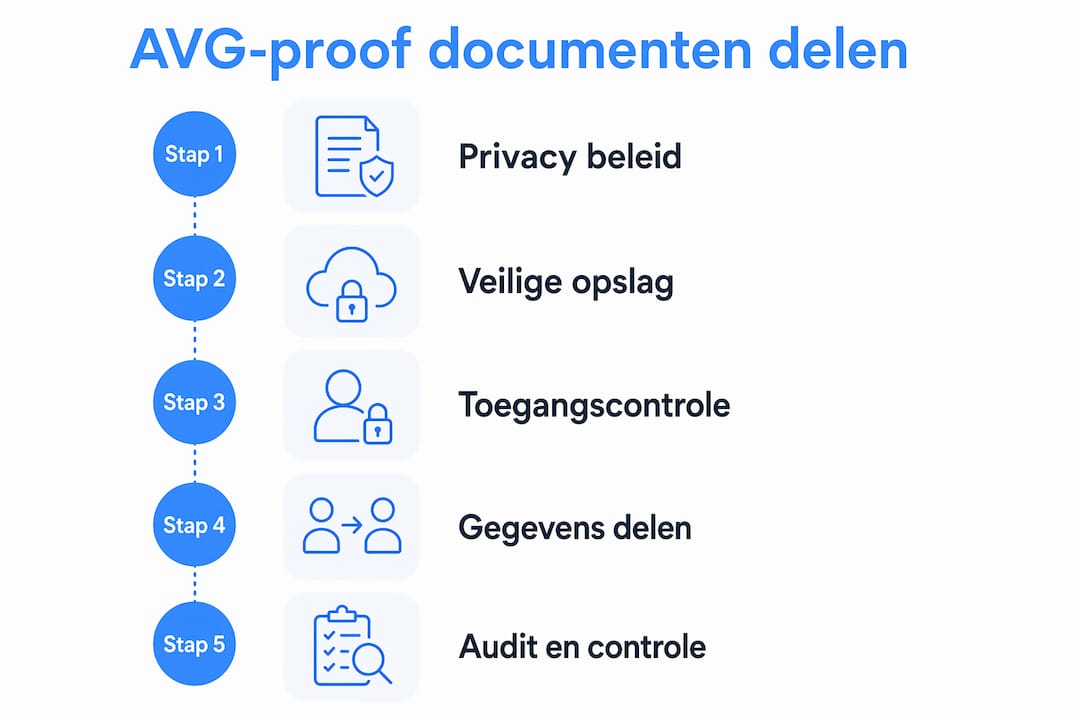
Securely sharing documents in coaching means more than sending a file via email. It's about a structured process in which coaching documents are accessible only to the right people, are stored on EU servers, and comply with the GDPR. Those who organize this well not only operate in a legally correct manner, but also build a professional relationship with the coachee.
The core of effective document management in coaching:
- GDPR compliance: coachees have the right to access their complete file within one month of a request.
- Central storage: documents, session notes, and progress in one secure system, not scattered across email, WhatsApp, and separate folders.
- Secure client portal: coachees get controlled access to their own program information.
- Technical measures: encryption, multi-factor authentication, and a log of access actions are not a luxury, but a requirement.
- Privacy by design: the system is built so that data is protected by default, not secured after the fact.
Table of contents
- Why an integrated coaching workspace makes the difference
- How do you comply with the GDPR when sharing coaching documents?
- What does a secure client portal offer your coachee?
- From calendar to reporting: practice management in one system
- How do you choose and implement a document system for coaching?
- How do you manage client data and calendar efficiently?
- How do you onboard coaches and coachees into a new document management system?
- Exantur: a workspace built around the coaching relationship
- Key insights
Why an integrated coaching workspace makes the difference
Many coaches work with a patchwork of tools: Google Drive for documents, email for communication, a separate calendar app, and a spreadsheet for progress. That works, until a coachee asks to access their file and you spend an hour gathering everything together.
An integrated coaching workspace brings this all together. Session notes, documents, assignments, progress reports, and calendar are all in the same environment, linked to the coachee's program. You can see at a glance where someone stands, without switching between five tabs.
Platforms like Exantur, Digitaal Coach Dossier, Trackler, and Pluvo are built specifically for coaching. They understand that a coaching file is different from a project folder: it contains sensitive observations, personal breakthroughs, and confidential action points. A generic tool like Google Drive doesn't provide that context and lacks the privacy safeguards the GDPR requires.
Features a coaching workspace should have:
- Searchable session notes with room for observations, insights, and action points
- Document storage and assignment management per coachee
- Progress tracking and reporting
- Structured assessments such as DISC profile or Wheel of Life
- Calendar and appointment management
- Secure client portal with configurable access rights
Pro tip: Link each document directly to the coachee's program, not to a generic folder. That way you can retrieve everything for an access request and maintain an overview, even when you're guiding dozens of coachees.
How do you comply with the GDPR when sharing coaching documents?
The GDPR sets clear requirements for coaches who process personal data. Privacy by design means that your system is set up by default so that only authorized people have access, with logs that record who viewed which document and when.
Sending coaching documents as separate PDFs via email no longer meets current standards. A password on a PDF is not encryption within the meaning of the GDPR. A centralized, encrypted platform is the only workable solution.
Technical requirements for secure document sharing:
- Encryption: AES-256 and multi-factor authentication protect coaching data effectively.
- Audit log: an automatic log of access actions makes access requests manageable.
- EU hosting: data may not simply be stored outside the EU.
- Data processing agreement: when using external software, a data processing agreement is mandatory under Article 28 of the GDPR.
- Access management: set per coachee who may view which documents.
Did you know? Coaches experience less stress around privacy rules when they work with automated logs and fixed processes for access requests. The absence of such an automatic logging process is a bigger stress factor for many coaches than the GDPR legislation itself.
What does a secure client portal offer your coachee?
A secure client portal gives the coachee access to their own goals, progress, assignments, and reports. That sounds simple, but the effect on the coaching relationship is significant. Coachees who can look back on their program between sessions are more actively engaged and come to conversations better prepared.

Coaches who use a central client portal increase trust and professional image because coachees get secure, continuous access to their program information. Privacy is not a side issue here: it is the very foundation of the coaching relationship.
Benefits of a client portal at a glance:
- Coachees always see their current goals and progress
- Secure access via login credentials, without documents being sent around by email
- Access rights are configurable per document or phase of the program
- A professional image strengthens the coach's reputation
- Compliance with the GDPR right of access is embedded in the system
Pro tip: Introduce the portal during the very first conversation. Explain what the coachee can find there and how it works. Coachees who use the portal from day one keep using it.
From calendar to reporting: practice management in one system
Specialized coaching software does more than store documents. It connects calendar, appointments, check-ins, and reports into a working whole. Scheduling an appointment automatically triggers a reminder; after the session you record notes that are directly linked to the coachee's goals.
Exantur combines client management, session documentation, progress tracking, and between-session check-ins in one environment. That saves switching and reduces the chance of errors. Efficient practice management with software reduces wasted time by integrating calendars, contact management, and reports into one platform.
Tasks you centralize in a coaching workspace:
- Schedule appointments and send reminders
- Record session notes and link them to goals
- Share assignments and documents with the coachee
- Track progress and generate reports
- Send check-ins between sessions
- Structure coaching programs per program
How do you choose and implement a document system for coaching?
The choice of a document system starts with the question of what you need daily. Security and GDPR compliance are non-negotiable. Ease of use determines whether you actually use the system.
Evaluation criteria for a coaching document system:
- Security: EU hosting, encryption, MFA, and audit log present?
- GDPR-compliant: is a data processing agreement available and is the system privacy by design?
- Ease of use: can both coach and coachee work with it quickly?
- Features: session notes, document storage, portal, reporting, and calendar in one system?
- Support: is support available for questions or problems?
Implement step by step. Start with a pilot for a small group of coachees, test the workflows, and adjust where necessary. Then train all coaches in the system before rolling it out broadly. Communicate clearly to coachees what the portal is, why you use it, and how they log in.
Best practices for daily use:
- Always save the most recent version in the system, not locally on your laptop
- Give coachees access only to documents intended for them
- Periodically check who has access to which files
- Actively use the log for access requests
How do you manage client data and calendar efficiently?
Client data and calendar belong together in a coaching workspace. A coachee without associated appointments and notes is just a loose row in a spreadsheet. Link each contact directly to the program: contact details, appointments, session notes, documents, and progress in one overview.

A coaching CRM built specifically for coaches keeps the relationship at its core. Not the deal or the ticket, but the coachee's program. That way, at every conversation you immediately see the history, the goals, and the outstanding action points, without searching.
Calendar integration prevents double bookings and ensures that reminders are sent automatically. That may sound like a detail, but it saves coaches weekly time they can better invest in the conversation itself. Link your calendar to your coaching software and let the system do the administrative work.
How do you onboard coaches and coachees into a new document management system?
A good system that no one uses solves nothing. Onboarding determines whether the investment pays off. Coaches have different needs than coachees: coaches want to know how to create files, record notes, and share documents. Coachees want to know how to log in and what they can find.
Keep the onboarding short and practical. A short instructional video or a simple two-page manual is enough for most coachees. Coaches benefit from a live session or a more detailed tour of the system, so they get to know the features they need daily.
Platforms like Exantur are built for coaches who take their profession seriously, not for IT specialists. The interface is set up so that a coach without a technical background can get started quickly. Still, it pays off to take some time at the start: explain why the system exists, what it offers the coachee, and how it protects the privacy of both parties. This significantly increases acceptance and usage over the long term. Also check out alternatives for coaching platforms if you want to compare which approach best suits your practice.
Exantur: a workspace built around the coaching relationship
Coaches who take their document management seriously deserve software that does the same. Exantur is not a generic project tool repurposed for coaching. It is built from the ground up around the coaching relationship: client management, session documentation, progress tracking, check-ins, assessments, and a secure client portal in one environment.
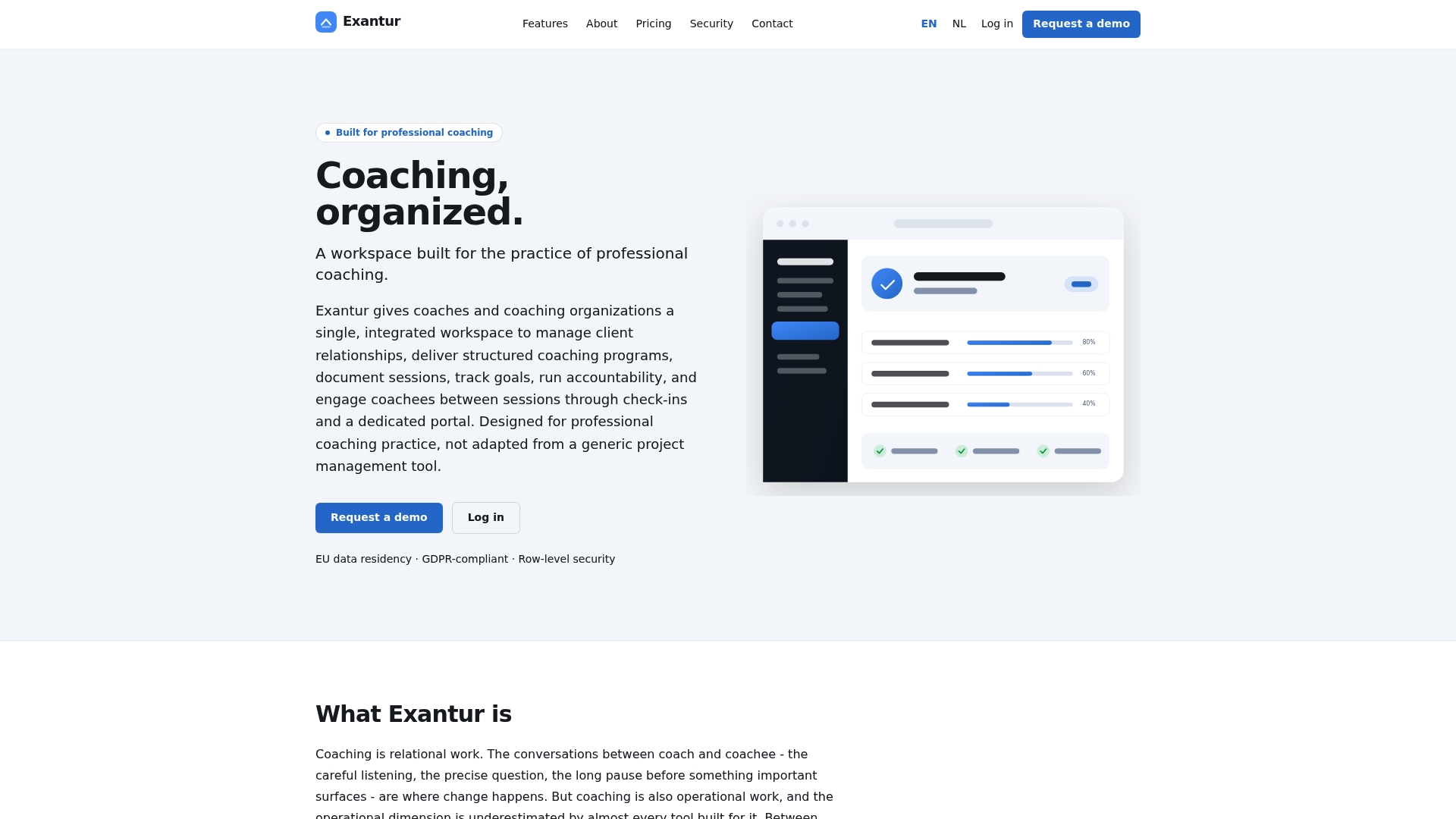
Where Google Drive leaves coaching files scattered and WhatsApp is no GDPR-compliant alternative, Exantur offers a central workspace that meets the requirements of the GDPR, runs on EU servers, and protects sensitive coachee data with row-level security and multi-factor authentication. Through the client portal, coachees get access to their own goals and progress, which increases engagement between sessions. Reports are confidential and clear, without you having to compile them manually.
Want to see how Exantur works for your practice? Check out the features at exantur.com and start a trial period.
Key insights
Securely sharing documents in coaching requires an integrated, GDPR-compliant workspace with a secure client portal, encryption, and automatic audit logs.
| Point | Details |
|---|---|
| GDPR right of access | Coachees have the right to access their complete file within one month of a request. |
| Privacy by design | Only authorized people have access, with logs of all access actions. |
| Separate PDFs are insufficient | A password on a PDF does not comply with the GDPR; an encrypted platform is required. |
| Client portal increases engagement | Coachees who can follow their program are more actively engaged and better prepared. |
| Exantur as an integrated solution | Exantur combines document management, session notes, portal, and reporting in a GDPR-compliant workspace on EU servers. |